Essay
The bugs
A text about the old fantasy of working outside, the freedom we imagine elsewhere, and the damn mosquitoes that bring us back to reality.


articles
There’s a pattern I keep noticing when I talk with developers, designers, and, more generally, people who are a little tired of spending their days inside the great modern software machine: once the honeymoon is over, a lot of people aren’t actually having that much fun using AI tools.
Wait, what?
Not because the tools are useless. That would be too easy. The tiring truth is that they are useful. Sometimes extremely useful. Sometimes useful in a way that makes you stare at your screen and think: “Well. I guess this is the future.” But usefulness is not the same thing as pleasure. And productivity is not the same thing as meaning.
That is where I still get stuck.
I’ve been using AI coding assistants for about six months now, mostly . I came at the whole thing with what I would call a healthy dose of skepticism. I wanted to understand what was real, and which part of the story was just people selling shovels during the gold rush.
The marketing around AI did not help. I really like Seth Godin’s idea that good marketing often comes down to saying: “People like us do things like this.” You are speaking to people who already share part of your worldview. But the way AI tools are sold often feels like the opposite. It is fear, hype, vague promises, with a constant noise underneath saying: “If you are not using this, you are already dead.”
People like us do things like this? No. People like us are apparently late, obsolete, and supposed to feel bad for not turning every thought into a before lunch.
That kind of marketing does not land with me. It exhausts me. It makes me want to go outside and touch grass, which is inconvenient because I work in tech and touching grass is practically a service outage.
So I put off trying those tools for a long time, precisely because of the hype. But after hearing the whole village tell me: “Man, since December, I barely write a line of code anymore,” I started wondering whether maybe I was the village idiot after all. So by March, well, I finally jumped in.
My honeymoon phase arrived around April.
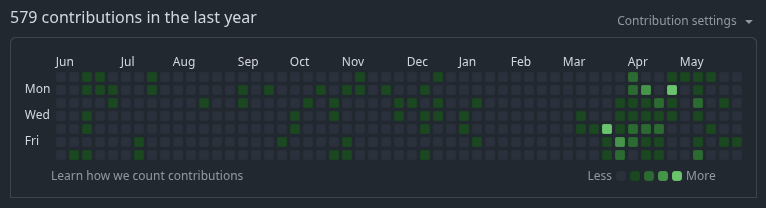
I went through that phase. The first rush of asking for something in natural language and seeing part of your vision appear on screen in five minutes is really something. It is not perfect. It is not always good. But it is there. Alive enough for your brain to start doing dangerous math.
Not long after, I was opening with 12,000 lines in a single day, a hosting bill that looked like it had developed a gambling problem, and probably the CO₂ equivalent of a Dodge Ram doing a five-hour burnout in a Costco parking lot.
Even my girlfriend eventually noticed that I could now code anytime. Before, a little vacant stare might have meant I was thinking about the Roman Empire, like any self-respecting guy in his mid-thirties. Now she would see me staring into space and wonder if I was secretly coding on my phone. She was not entirely wrong either. Once your backlog fits in your pocket, even going to the bathroom starts to look like a productivity opportunity.
I am also a dedicated Factorio player, for those who know, which means, in other words, that automation excites me a little too much.
These tools are little dopamine machines. At one point, I started using . I had a vault in full of ideas and tools I had always wanted to build, and I arranged things so that around midnight, right before my reset, OpenClaw would check whether I had any left and launch a series of Codex processes in parallel while I slept.
In the morning, I would wake up and eat my bowl of AI slop. I would look at what had been generated overnight, ask for changes, complain about details, keep the parts that worked, throw away the parts that were clearly possessed, and try to decide whether I had really been productive or had simply created a new job for myself as the janitor of my own robot factory. Honestly, some of what came out of there was impressive. There are even things I “built” during that period that I still use several months later. I will probably keep using them and improving them.
So no, this is not an article saying AI is trash. That would be comforting, but it would be false.
After about a month of experiments, my computer had basically become a haunted little factory. I tried local models. I tried token optimizers. I tried connecting design systems to . I chased every little workflow that made me think: maybe this is the one that changes everything. And then, strangely, I ran out of ways to be impressed.
Or more precisely, I started to feel empty.
The truth is, I am an artist in disguise. My brush just happens to be code. Showing someone a tool I made, watching them use it, hearing them tell me it helped, that it changed something for them, seeing that small spark of “oh, this actually makes my life easier,” that is what interests me. I like making things. Not just having things.
And the huge pile of stuff I generated in April, even when it came from my ideas, did not fully feel like my work. It was my taste, my direction, my prompts, my corrections, my sense of product. But was it my work? I still do not know. That is the question I keep returning to: what is the point of having a nice painting if you do not feel like you painted it?
The more I used AI in my own projects, the more I felt caught inside its logic. When a project starts moving at AI speed, it gets harder to slow down and ask: “Do I actually care about this?” You generate more, understand less, and one day you open your codebase with the feeling of walking into a house where the mortgage is in your name, but someone else chose all the furniture.
When I think back on that month, I do not think AI made me more productive in the sense that really matters. On paper, yes, absolutely. The curve goes up. The output is absurd. The velocity looks incredible. If you measure the number of things that technically exist now, AI looks like a miracle. But did I understand the product better? Did I make something that fit better? Did it create something people actually cared about?
I am less convinced.
And that is what is tiring, because I know very well how powerful these tools are.
I mostly write code for my own projects and my own businesses. I do some consulting, but I am not usually living inside someone else’s roadmap, trying to ship tickets as fast as possible. In that context, I understand very well why AI is attractive. A job is a job. Shipping faster has value. Being more competitive has value. We cannot ask every developer to care deeply about every button, every abstraction, every tiny decision buried in a codebase nobody will remember in six months.
Sometimes, good enough is good enough. And honestly, I have been the problem before. In the past, I slowed teams down because, to me, the path mattered as much as the destination. I cared too much about the details. I wanted the thing to be well made, to sound right. I stalled projects because I could not let go of details that maybe did not matter that much to other people.
Over time, I learned something useful about myself: I cannot do work I do not believe in. If I do not see the value, I cannot pretend for very long. So I learned to let go, or to leave.
Not dramatically. Not as some grand artistic gesture. Simply because it is better for everyone.
But this is where AI gets uncomfortable, because many people did not sign up for this version of work. Many creative workers are being asked to use AI, not because it makes their work more meaningful, but because it makes the spreadsheet look better. And maybe that is inevitable. A company looks at AI and thinks: “If we do not force people to use this, how are we going to stay competitive?” That is why selling AI through fear works so well. Everyone feels late. Everyone feels like someone else is shipping faster. Everyone feels like there is a 22-year-old somewhere launching 14 startups before breakfast while your team is still debating the copy on a damn button.
I felt it too. That pressure, that little panic, that feeling of: “I need to position myself before everyone else gets ahead.” It is easy to laugh at the hype until the hype gets into your head and starts sounding like strategy.
At some point, you catch yourself thinking: fine, even if I do not really like what it produces, I sort of have no choice but to say I use it, otherwise I will look like an idiot. Not necessarily because it makes my work better. Not necessarily because it makes me prouder of what I do. But because in the little social theater of tech, not using AI is starting to look like showing up to a meeting with a fax machine under your arm.
I even had to go through the surprisingly irritating grief of letting go of my macro-heavy setup, the kind of setup that had served me well for years and made me feel like I had a small mechanical advantage over chaos. There is a very specific pride that comes from saving a few seconds on repetitive work, tuning your editor until it feels like an extension of your hands, building those little systems that make you faster without making you feel removed from the work. But at some point, I had to admit the obvious: even at my personal peak as a programmer, even with all my , my shortcuts, my muscle memory, and my little systems-programmer tricks, I am still slower than these tools at producing code. I really am :(
At some point, we have to ask whether all of this helps us do better work, or simply more work. We have to ask whether the tool removes friction from the process, or removes you from the process. We have to ask whether you are still building something, or simply managing the output of a machine that does not care about anything.
It is a bit like the difference between a cabinetmaker seeing, fifteen years later, a piece of furniture they made with their own hands, and the guy who watched the assembly line at an IKEA factory while waiting for someone to lose their mind trying to assemble it at home. In both cases, there is furniture. In both cases, technically, someone can sit on it, put a lamp on it, say it does the job. But the relationship to the object is not the same. The relationship to the work is not the same either.
And maybe that is what gets tiring when you become good at something. You do not just see the furniture anymore. You see the joints, the wood, the compromises, the shortcuts, the cut corners. You see what it could have been. Sometimes, being an expert just means you have developed a better capacity for disappointment.
So, is it your work or not?
Honestly, I still have a hard time with that question.
What I am more certain about is that measuring productivity in lines of code per day probably already had a pretty low ceiling. At some point, writing code faster stops being the , the hard-to-copy advantage. We can already write code faster than we can make good business decisions, faster than we can receive real customer feedback, faster than we can sit with a problem long enough to understand it. Speed helps when you know where you are going. It becomes much less useful when you are simply throwing more things at the wrong wall with more confidence.
And maybe that is what AI reveals more than it fixes.
Writing code was not the hard part of software development. Maybe it never was. The hard part is finding something people care about. Listening carefully. Understanding the shape of the problem. Offering a solution that only seems obvious after someone says it out loud.
I do not think you can manufacture that. And I am not sure I want to.